
Gaming Phones
Every phone here has a display running at 120Hz or higher -- the baseline for smooth, responsive gaming. That includes flagship phones with excellent all-around performance and purpose-built gaming devices with active cooling and physical trigger buttons. Compare specs across the full range to find what fits your games and your budget.
Try removing a filter or
All Gaming Phones, Ranked


A sturdy design with focused camera enhancements and extended battery life, aimed at creators and heavy users.


A versatile, durable phone with enhanced cameras and outstanding battery life, ideal for those seeking reliability and performance.
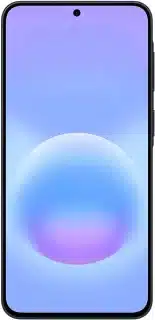
A balanced phone offering good displays and long-lasting software support but with room for camera improvement.

A sleek, foldable phone with an innovative design that finally matches traditional smartphones in size and weight.

A refined phone blending top-tier power and subtle design with familiar components, capped with a dose of AI advancements.


A refined Android phone focused on on-device AI, but with minor hardware upgrades.

A refined device with a robust design and impressive features, but incremental upgrades over last year.

This device offers substantial upgrades, including enhanced AI capabilities and a versatile telephoto camera.

A safe, minimal update with enhanced AI features is a solid choice, but don’t expect drastic changes from prior models.

A stylish foldable phone with a standout cover screen, offering great versatility but limited cover screen app support.

A capable phone with a big screen, strong performance, and a few AI features, but limited design changes from past models.

An incredibly thin and light phone with thoughtful design but some compromises in camera and battery.
About Gaming Phones
Yes, compared to 60Hz the difference is noticeable — animations are smoother, touch response feels tighter, and fast-moving games are easier to track visually. The jump from 120Hz to 144Hz is more subtle. Most people can perceive it in side-by-side comparison, but it is not a night-and-day improvement for the majority of mobile titles. What matters more is whether the phone can sustain that rate under load. A phone that drops to 90Hz after 20 minutes is worse than a well-cooled device that holds 120Hz the whole session.
Thermal throttling is when a phone’s processor slows itself down to prevent overheating. It happens on every smartphone under sustained load, and it is the main reason a phone can feel fast for the first 10 minutes of a game and noticeably slower after 30. Standard flagship phones use passive cooling — heat pipes and graphite sheets — which can’t keep up under extended gaming. Dedicated gaming phones address this with active cooling: a built-in fan or an optional clip-on cooler. Third-party clip-on coolers are a cheaper workaround for any phone that throttles.
Physical shoulder triggers are pressure-sensitive buttons on the edges of the phone frame that act as dedicated game controls — equivalent to L1/R1 on a console controller. They let you shoot, aim, or switch items without moving your thumbs off the screen. Not all phones on this page have them. Check the individual spec page — it will list trigger support under controls or input features.
Most do, but carrier compatibility varies by model. Dedicated gaming phones from brands like ASUS ROG and Nubia RedMagic are sold mainly unlocked, often as imports, and band support varies by model. Before buying, check the phone’s band list for the ones Bell, Rogers and Telus rely on: LTE bands 4, 7 and 66, the 700 MHz bands (12, 13 or 17), and 5G band n78. These phones are not sold through carrier retail stores, so carrier trade-in deals do not apply.
For most games, any current flagship with 120Hz will do the job. The Samsung Galaxy S-series, Google Pixel Pro, and iPhone Pro all handle casual and mid-tier titles well. Dedicated gaming phones become relevant when you play demanding titles for extended sessions — an hour or more — and sustained frame rate matters more than camera quality or a compact size. If you game hard and often, the active cooling and trigger buttons are genuine advantages. If you game occasionally, they are not worth the tradeoffs.
It can, but modern adaptive displays reduce the impact significantly. Phones with adaptive panels dynamically lower the refresh rate when the screen is idle and only ramp up during fast motion. A fixed 144Hz during active gameplay does draw more power — which is why dedicated gaming phones typically come with larger batteries than standard flagships. Battery capacity is listed on each phone’s spec page.